Showing posts with label Sri. Show all posts

Wednesday, April 1, 2020

Comet ATLAS - view from Sri Lanka


Comet ATLAS has faded away. It never reached the expected brightness and scientists believe that the comet disintegrated to smaller pieces making it fade. 

However, we got a new comet - SWAN. it has brighten to magnitude 5 already. So, lets keep fingers crossed. I will have a separate page on it. 


We are SO OVERDUE for a decent - read visible to the unaided eye - comet in the Northern Hemisphere. Maybe, just MAYBE, our wait is over. Comet ATLAS has been brightening quite nicely and is currently visible in binoculars.

The comet is in the northern sky right now near the Big Dipper. See the star chart below.

Comet Atlas is racing toward the inner solar system, and it could become the brightest comet seen in the night sky in over two decades. The comet, discovered by an observatory designed to protect Earth from asteroids, may even be visible during the day just two months from now.

Also known as C/2019 Y4, this comet was discovered by astronomers at the Asteroid Terrestrial-impact Last Alert System (ATLAS) in Hawaii in December 2019. At the time, the comet was exceedingly dim — but the comet became 4,000 times brighter in just a month. This increase is far greater than astronomers predicted, and could potentially signal the comet may soon be exceptionally bright.


Comet ATLAS proved a close match to the Great Comet of 1844 (C/1844 Y1). Both have periods around 4,000 years, approach within 0.25 astronomical unit (a.u.), or 37.4 million kilometers, of the Sun at perihelion, and are inclined 45° to the ecliptic. These and other orbital similarities were strong enough to conclude that both objects were fragments of a single, much larger comet that broke apart about 5,000 years ago. For all we know there may be additional fragments en route for future appearances.

It is expected that the comet will continue to brighten, and it is possible the comet may be visible to the naked eye sometime in April or May 2020. It will reach its nearest point to Earth on May 23 and come to perihelion (closest to the Sun) on May 31.

Watch this space and register to SkyAbove news alert (SMS - "REG SKY" to 77000 on your phone) for further details on position of the comet.

So, it is understood that comet Atlas has disintegrated and below pictures prove it. 


Thursday, January 30, 2020

Starlink visibility from Earth - Sri Lanka


The SpaceX Starlink is a satellite constellation being constructed by American company SpaceX to provide satellite Internet access.The constellation will consist of thousands of mass-produced small satellites, working in combination with ground transceivers. SpaceX also plans to sell some of the satellites for military, scientific or exploratory purposes.

This bunch of satellites could be viewed from earth from time to time as it passes above geographic locations. The Sri Lankan public will also get their fair share of viewing when the bunch of satellites pass over Sri Lanka. 

The visibility could be low based on condition of the sky above Colombo. Shouldn't be an issue to rest of the Island. Hence, recommend using Binoculars for better viewing. 

The times will be shared via SMS service. To register to the SMS service, type sky and SMS to 77000 on Dialog, Airtel, Hutch or Etisalat phone. 


Starlink constellation, phase 1, first orbital shell: 72 orbits with 22 each, 1,584 satellites at 550 km altitude.

As of January 2020, SpaceX has deployed 242 satellites. They plan to deploy 60 more per Falcon 9 launch, with launches as often as every two weeks after late 2019. In total, nearly 12,000 satellites will be deployed by the mid-2020s, with a possible later extension to 42,000. The initial 12,000 satellites are planned to orbit in three orbital shells: first placing approximately 1,600 in a 550-kilometer-altitude (340 mi) shell, then approximately 2,800 Ku- and Ka-band spectrum satellites at 1,150 km (710 mi) and approximately 7,500 V-band satellites at 340 km (210 mi). Commercial operation could begin in 2020.

Concerns have been raised about the long-term danger of space junk resulting from placing thousands of satellites in orbits above 1,000 kilometres (620 mi) and a possible impact on astronomy, although SpaceX is reportedly attempting to solve the issue.

The total cost of the decade-long project to design, build and deploy the constellation was estimated by SpaceX in May 2018 to be about US$10 billion. Product development began in 2015, with the first two prototype test-flight satellites launched in February 2018. A second set of test satellites and the first large deployment of a piece of the constellation occurred on 24 May 2019 (UTC) when the first 60 operational satellites were launched. The SpaceX satellite development facility in Redmond, Washington, houses the Starlink research, development, manufacturing and on-orbit control operations.

Sunday, November 18, 2018

Comet Wirtanen


Comet-Wirtanen- as seen through telescope on 11-4-2018
photo credit Martin Mobberley

46P / Wirtanen is a small short-period comet with a current orbital period of 5.4 years. It was the original target for close investigation by the Rosetta spacecraft, planned by the European Space Agency, but an inability to meet the launch window led to Rosetta being sent to 67P/Churyumov–Gerasimenko instead.It belongs to the Jupiter family of comets, all of which have aphelia between 5 and 6 AU. Its diameter is estimated at 1.2 kilometres (0.75 mi)
Comet Wirtanen is expected to be one of the very few coments that would be visible to the naked eye for sometime.

The Comet will be visible throughout the nights from November to December with naked eye visibility in Mid parts of December. 
The comet would reach the closest point to earth on the 16th of December 2018 and will be visible there on till Jan 2019. This will be a good opportunity to view a Comet as there will be no identified naked eye visible Comet for sometime. 

Watch this space for general information and subscribe to the skyabove SMS alert if you are a Sri Lankan to get more accurate details.


Monday, January 29, 2018

Beautiful Moon and it's phases

Please share with your friends and let them enjoy the wonders above too !


Moon is the largest visible space object to earth, hence, often ignored for the wonderful viewing experiences it proved. Apart from the day the full moon we admire, there are several phases of the moon that one could observe.

Micro Moon - A Micromoon happens when a Full Moon or a New Moon coincides with apogee; the point in the Moon's orbit farthest away from Earth

Super Moon - A Super Moon happens when a Full Moon or New Moon is near the Moon's closest approach to Earth; also called perigee


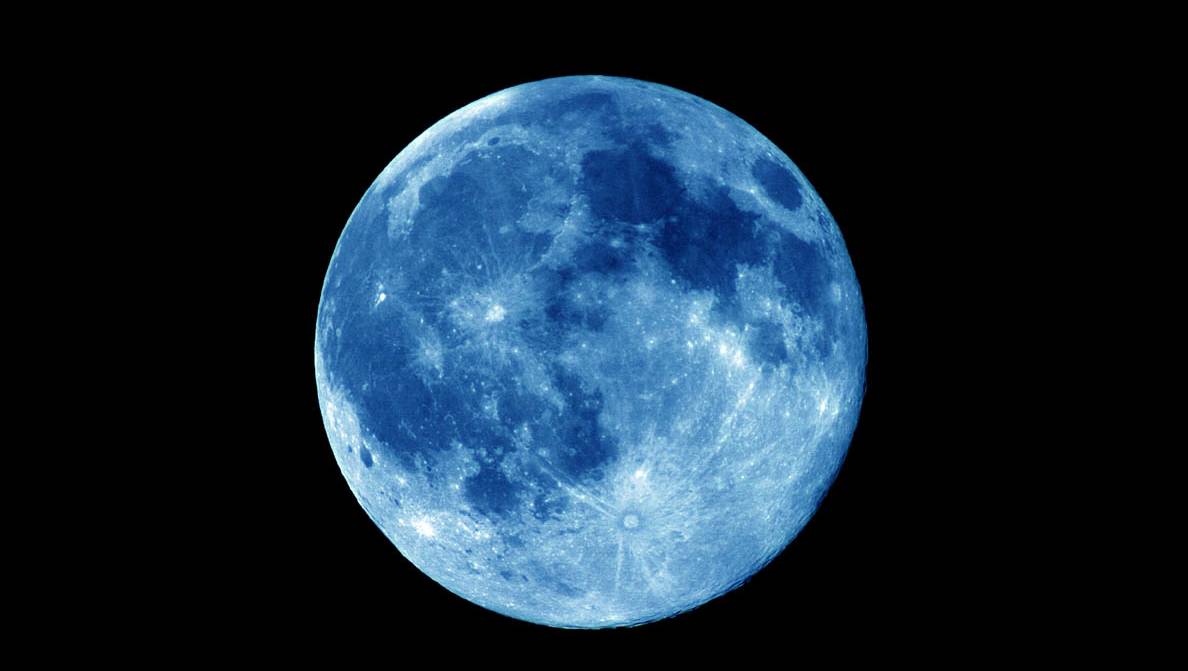
The Blue Moon 

Blue Moon - There are two definitions of a Blue Moon; both are a type of Full Moon. If the moon actually looks blue, it's caused by a rare type of dust in the atmosphere. The other is when there are two full moons during a calendar month. 

Black Moon - There are several definitions of a Black Moon. It can be the third New Moon in an astronomical season with four New Moons or the second New Moon in the same calendar month.

Red Moon - This is when the moon gets a reddish colour due to moon passing through the penumbra of earth. Penumbra is explained in below picture 


Perigee and Apogee

The Moon's orbit around Earth is not a perfect circle, but elliptical, with one side closer to Earth than the other. As a result, the distance between the Moon and Earth varies throughout the month and the year. On average the distance is about 382,900 kilometers (238,000 miles).

The point on the Moon's orbit closest to Earth is called the perigee and the point farthest away is the apogee.


The Red Moon


Lunar Eclipse 

A lunar eclipse occurs when the Moon passes directly behind the Earth into its Shadow (Umbra). This can occur only when the sun, Earth, and moon are aligned exactly, or very closely so, with the Earth in the middle. Hence, a lunar eclipse can occur only the night of a full moon. The type and length of an eclipse depend upon the Moon's location relative to its orbital nodes or the distance from Earth. 


Moon Phases

The sunlight that reflects onto the Moon's surface we call a Moon phase. The amount of that light we can see from our point of view on Earth varies every day. The lunar month is generally divided into four primary and four intermediate Moon phases: New Moon, Waxing Crescent Moon, First Quarter Moon, Waxing Gibbous Moon, Full Moon, Waning Gibbous Moon, Third Quarter Moon, and Waning Crescent Moon.

Watching the phases of the moon and how the position and shadow of the moon changes can be a fun activity. There are other fun instances that can be associated to the moon as when the International Space Station travels across the visible moon surface. (Click here for Video)


Taking photographs of the full moon whilst birds or objects flying in front is considered rare and fun. Have fun with the moon and please do share your photographs and experiences with us.


Wednesday, January 24, 2018

Iridium Flares


An Iridium flare is a type of visibility that a satellite produces (also known as satellite glint) when the antennas of an Iridium communication satellite reflect sunlight directly onto the surface of the Earth. Whoever is looking at the right spot at the right time will see a brief but bright flare in the sky which is sometimes brighter than Venus and even the Moon (when it's not full).


However, you don't have to depend on sheer luck to see an Iridium flare. The Skyabove service will provide you with an SMS alert on the brightest flares that occur from time to time and the directions to view it from.


To better experience Iridium Flares, you could follow the below mentioned steps...

  1. Use the details provided by the SkyAbove service.
  2. Determine your location in coordinates (Predictions are based on SL center line, hence, the angle and time of viewing will differ minutely.
  3. Recheck the prediction shortly before observing to reconfirm the time and directions.
  4. Make sure your clock or watch is tuned as precisely as possible, otherwise you'll likely miss it or be too early and think it's over. usually, the time variant is + / - 3 minutes for Sri Lanka.
  5. Go outside at least a couple of minutes prior to the time listed on the correct date.
  6. Look in the direction and altitude listed.


There are Many Satellites that orbit the Earth at any given time.. 


An Iridium flare looks like a star that moves slowly and quickly brightens, then slowly fades away. Sometimes it leaves a visible trail, fades away in less than a second from becoming visible, or lasts more than a minute, it is most likely either a meteor, a fireball or even the International Space Station.

Some terms that we use to provide Exact location to view are as below.

  • Azimuth - Measured clockwise around the observer's horizon from north; north has an azimuth of 0°, east 90°, south 180° and west 270°.
  • Altitude - Overhead is 90°, directly in front of you is 0°.


Determining the correct altitude to watch is a bit more difficult than the azimuth, especially in the twilight before stars begin to appear, which is the usual time satellites are seen. A handy gauge is your fist held at arm's length - it is approximately 10° 'tall'. I prefer to also extend my index (pointer) and pinky fingers straight out (not 'splayed') to provide a better 0° and 10° gauging point. Place your extended pinky on the horizon in front of you, look up to your index finger & note where it is against the sky -- count "10". Keep your eyes on that spot, and shift your fist upwards until the pinky is where the index was - then up to the index's new position & count "20", & so on. Repeat until you've determined the correct angle - and of course, a 5° (eg, 45° etc.) position falls in the middle between the extended fingers. This 'gauge' is pretty accurate. You can continue up to 90° & if that point is directly overhead, you're doing it correctly.

Below is a video of a recorded Iridium Flare - you can find many such recordings on youtube. Let us know about your experiences too..


 Happy Star Gazing !!!

Wednesday, December 13, 2017

Write-up on Gemenids Meteor Shower.

Original Post by Helen Avery


 The Geminids meteor shower is caused by an asteroid called 32 hundred Phaethon, and Phaethon has a legend all of his own — the most detailed of which was written by the Roman poet Ovid, in the epic Metamorphoses, in 8 AD.

 The beautiful, but tragic, story goes that Phaethon’s mother reveals to him that he is, in fact, the son of Phoebus — the God of the Sun — and disbelieving the story, Phaethon goes to Phoebus to ask him if it’s true. Phoebus tells his son that he is correct, and in order to prove his divine lineage he will grant Phaethon any wish he desires…

 Now Phoebus is the God of the Sun and to the Romans, the sun was a blazing chariot  that was pulled across the sky by horses, and guided and driven by Phoebus… So what do you think Phaethon wished for? To drive the chariot for one day.

 Despite knowing this is a terrible idea because the chariot requires incredible skill and stamina to control, Phoebus stands by his promise, and reluctantly gives his son strict instructions on how to drive the chariot, telling him never to drop the reins… 


 But as soon as Phaethon sets off, the horses, sensing a different reins-man, begin to run wild, and Phaethon is his panic lets go of the reins… What happens next according to Ovid is both beautiful and tragic. The horses zoom up into sky, around the heavens, swooshing past the Moon who can’t believe what she’s seeing, before flying down so close to Earth that meadows are consumed and scorched, cities go up in flames, and nations are reduced to ashes. The whole of Earth is on fire.


Unable to stand the heat any longer, the Earth pleads with Jupiter to intervene. And Jupiter launches a lightning bolt at the charioteer, Phaethon, killing him in an instant, and bringing an end to the destruction.  And as the body of Phaethon is hurled from the chariot, it hurtles headfirst through the air leaving a trail of sparks behind it that appear to fall down to Earth like stars — or indeed the Geminids…

Wednesday, March 15, 2017

Meteor Showers


A meteor is a bright streak of light in the sky (a "shooting star" or a "falling star") produced by the entry of a small meteoroid into the Earth's atmosphere. If you have a dark clear sky you will probably see a few per hour on an average night. During one of the annual meteor showers you may see as many as 100/hour. Very bright meteors are known as fireballs - if you see one please report it.


Meteor showers are formed usually by the dust particle or debris left by comets.


When comets come closer to the Sun, the particles evaporate forming the famous tails we love to observe. Such particles get left behind to form the meteor showers.


As illustrated in above picture, the Preseids Meteor shower origins from Comet Swift Tuttle and we see the meteor shower radiant from Constellation Preseus, Hence the name.

One might get frustrated trying to experience a meteor shower as it is not similar to raindrops falling. Usually, a very good meteor shower would produce around 120 meteors per hour. i.e. around 2 per second. However, the meteors, though originating from a precise location, could appear anywhere in the sky as the location it enters the atmosphere and the size of the particle would be the deciding factor of whether we would be able to observe it. Usually, Meteor showers are best visible during very dark time of the night and with less light pollution - a full moon is a big negative factor to observe a meteor shower.

There are many meteor showers that occur during a calendar year and some of the famous ones happen in January, August and December. Some are listed below

January - Quadrantid Meteor Shower - Usually peaks around January 2nd
April - Lyrid Meteor Shower - Usually peaks around 22nd April
August - Preseids Meteor Shower - Peaks around 12th August
October - Orionoids Meteor Shower - Leftovers from Comet Halley - peaks around 21st October
December - Geminid Meteor Shower - One of the Brighter showers - usually peaks around 13th December

Below is a meteor that was caught on tape on 2nd June 2018 - suspected Daytime Arietids Meteor Shower !!


There are many more meteor showers that happen during a year and all are communicated to the alert application for the benefit of Sri Lankan public.


Tuesday, January 31, 2017

The Andromeda Galaxy


The Andromeda Galaxy is the closest Galaxy to the Milky Way Galaxy that we are in. Hence, logically, it should be visible isn't it? But, how many has observed / seen it ? 

The reason is that the Galaxy is so far away, you would see it as a faint single star. The below illustration indicates the distance between the two galaxies. If we see the largest and the brightest star in Milky-way as a dot, Andromeda being at the distance it is, appear faint too.  


However, it is observable to the naked eye if you are outside the city limits. Colombo, is quite bad as an observing site. However, a decent pair of Binoculars should do the trick.

So, How do we find it ?


In the night sky above Sri Lanka, Andromeda is to the northern hemisphere. Watch for the Constellation Orion - Draw a mental straight line towards north west direction and you should arrive at the area that is circled in red in the above diagram. You would see the below star charts in this area and locate the Galaxy as shown. Mind you, it is not the colourful Galaxy you would see as in the first picture of this blog - those are long exposure (at least 30 minutes) shots that makes it colourful. 


If you observe the sky from a clear, unpolluted location, you would most probably see a sight as below - it would be easier for anyone to spot the galaxy through naked eye if the skies are really clear. What you see like a puff of dust is Andromeda. 


If you use Bino's or telescope you would see something like below.


Happy Andromeda Hunting. Please provide feedback if you spot the Galaxy and feel free to share pictures. You can comment below. 

Saturday, January 21, 2017

The International Space Station Visible Passes

Click on images for larger versions and please do share with your friends who are fellow enthusiasts.


As of now, The International Space Station (ISS) is the Largest Man Made artificial object in the Sky. 


The ISS maintains an orbit with an altitudeof between 330 and 435 km (205 and 270 miles). It completes 15.54 orbits per day and is one of the most visible space objects from Earth. Below is a long exposure photograph of the Space Station crossing the sky. 


The ISS could be so bright at times, it becomes brighter than Venus - the brightest object we see in the sky apart from the sun and the moon. The below picture indicates the moon and ISS - ISS is the bright object (Dot) to the left of the moon. 


Additionally, the spotting the ISS crossing the disk of the Sun and the moon also can be described as phenomena that one should not miss. 


The passes of the ISS over a given Geographic location could be calculated and informed to the public. 

Below is a video of the ISS passing over land.


NASA also provides a 24x7 live feed from the ISS - Enjoy the view of earth from space below.


Enjoy the sky watch !

Friday, January 20, 2017

The Southern Cross (Crux Constellation)

Click on images for larger versions. Please share with fellow Lankans who wish to learn and enjoy the beauties of the night sky.


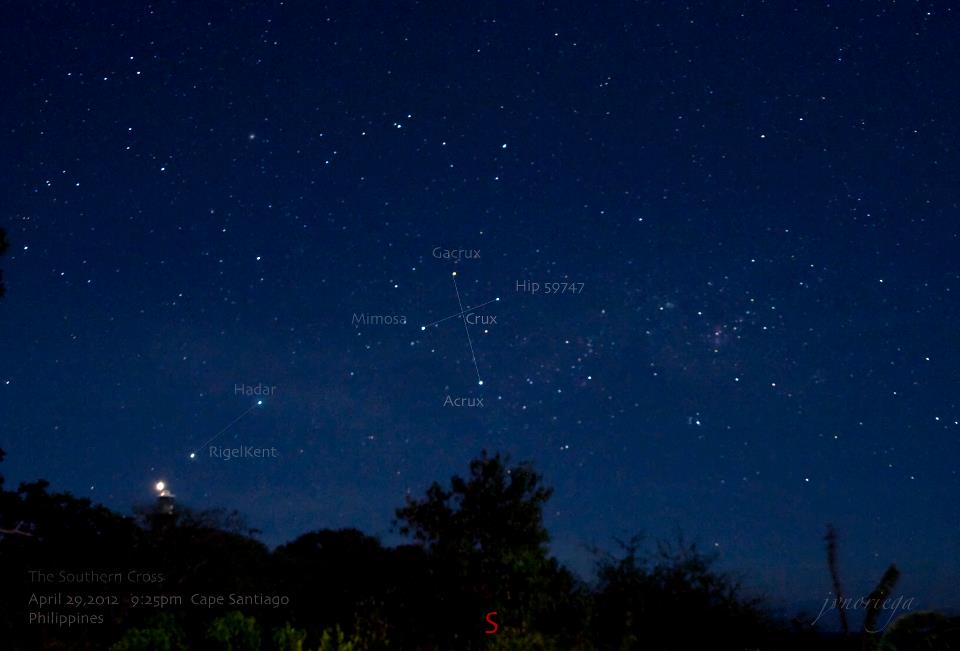
The Southern Cross or the Constellation Crux is visible most months throughout the year and is visible in the southern sky.

The importance of this constellation or star pattern is that when you connect the stars in the form of a cross, it always points to the absolute south or the south pole of the earth.


In January, it is visible in the morning skies and will shift to the evening skies by June. However, based on earth's position vs. the Sun, the constellation is one of the most visible and beautiful sights in the skies..


Enjoy ...


Monday, January 16, 2017

The Orion Nebula

(Click on images and enlarge for better viewing) 

The Below Image shows one of the most prominent constellations in the Night Sky - The Orion Constellation. (Click)


This was also made famous through the first of the movie series "Men In Black" starring Tommy Lee and Will Smith. However, as oppose to the Galaxy on Orion's belt (Which is not the scenario as mentioned in the movie itself), there is Orion Nebula (a.k.a. - M42). 


The constellation is visible most of the times through out a year. However, these days (Month of January) the constellation is clearly visible throughout the night and close observation shows the Nebula as a powder puff.  


This is one of the most visible Nebulae to the naked human eye. 


It is better viewed through Binoculars or Telescope. But, it is clearly visible out side city areas where there is less air pollution. Below is a long exposure photograph of the nebula .


Beautiful Isn't it ??

Yes, if you wonder why you don't see the multitudes of colour to the naked eye, it doesn't happen that way - you will always see stars more or less in white. It is only a planet or an object like comets that would have a slight variation in colour. The pretty pics we see are due to very long exposure of camera (more than 15 minutes)

Saturday, January 14, 2017

NGC 2451 Open Cluster - January


An open cluster is a group of up to a few thousand stars that were formed from the same giant molecular cloud and have roughly the same age.


The NGC 2451 Open Cluster probably discovered by Giovanni Battista Hodierna before 1654 andJohn Herschel in 1835. In 1994, it was postulated that this was actually two open clusters that lie along the same line of sight. To the Naked Eye, a cluster usually is seen as one star due to the distance from earth. However, mindful observation allows you to see many stars combined together as in a powder puff. 


The open star cluster NGC 2451 in Puppis (click) will be well placed for observation during January and beyond. It will reach its highest point in the sky at around midnight Sri Lanka time.  Refer below Map and the red circled area. Click on image to enlarge.   
At a declination of -37°58', it is easiest to see from the southern hemisphere but cannot be seen from latitudes much north of 32°N.
From Sri Lanka, it will be visible between 19:54 and 04:30. It will become accessible at around 19:54, when it rises 15° above the south-eastern horizon, and then reach its highest point in the sky at 00:14, 45° above the southern horizon. It will become inaccessible at around 04:30 when it sinks to 15° above your south-western horizon.
At magnitude 2.8, NGC2451 is visible to the naked eye, but best viewed through a pair of binoculars.